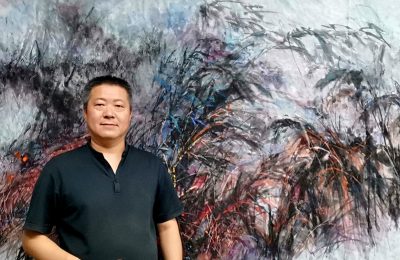
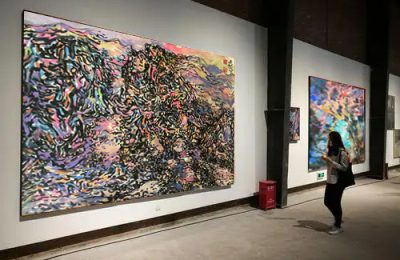
Master Ran was a great artistic master, painter, thinker, and art educator, formerly a professor and doctoral supervisor in the Chinese Painting Department of the Central Academy of Fine Arts. Muran Gong is a student of Master Ran and a contemporary painter. Today, I will share a long-concealed connection from the past. To continue and inherit Master Ran’s artistic philosophy, I took apart the character “松” (pine) from my given name, Lu Jinsong, and placed the Master’s character “然” (Ran) in the center, enveloping it—a symbol of the uninterrupted lineage. I advance every moment according to the artistic ideals the Master held in his lifetime. These seemingly intangible things are full of power; the iridescent seven-colored halo drifts and radiates in each astonishing creation. Today, we continue from the previous topic the cultural continuation between Master Ran and Muran Gong: Muran Gong Inquires of the Master.
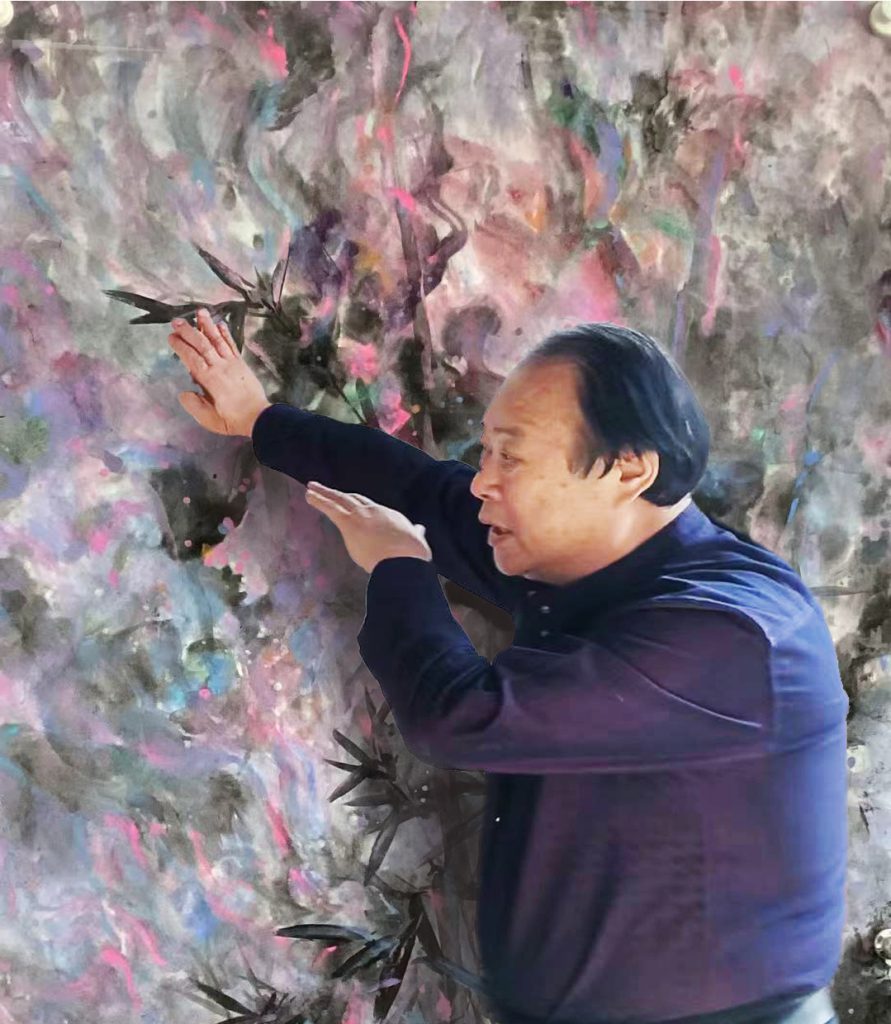
Master Ran was invited multiple times as a visiting scholar to numerous art institutions worldwide. Wherever he went, he never forgot his original aspirations, always shouldering the mission entrusted by the people of his homeland. Faced with queries and challenges about Chinese culture from leading figures at major prestigious universities, he steadfastly defended the dignity of our nation, argued on the merits, and utterly convinced Western scholars with unique Eastern cultural wisdom, profound artistic theory, and deep philosophical thought, making an indelible contribution to the global recognition of Chinese art.
Master Ran possessed a deep understanding of landscape painting. He had transformed into a carving brush to depict the mind’s imagery. The line in Chinese painting is an innate genetic characteristic. Lines coexisting in the world also share many points of similarity. France’s Ingres, Russia’s Nikolai Fechin, China’s Gu Kaizhi and Li Gonglin all manifested this phenomenon of comprehending and spiritualizing the line. Although not existing in the same spacetime, the灵动 (lingering spirit) of art can traverse East and West, ancient and modern. The profundity of Chinese painting lies in using brush and ink to express the work’s ideas and emotions, embodying the fundamental characteristic of line as primary. This is because the line in Chinese painting possesses rich variation and a high degree of formal beauty. The relationship between brush and ink is extremely close: ink is expressed through the brush, the brush is revealed through the ink; the brush captures the qi (spirit/vitality), the ink captures the yun (resonance/lingering charm).
Master Ran believed that all things in nature are the teacher. Without exception, no ancient sage, virtuous person, artist, or painter can place themselves above heaven and earth. After deeply studying the artistic concepts and philosophical thought of these predecessors, all things in nature become the ultimate mentor. Painting techniques can continuously be enriched, but the core essence will not be lost.
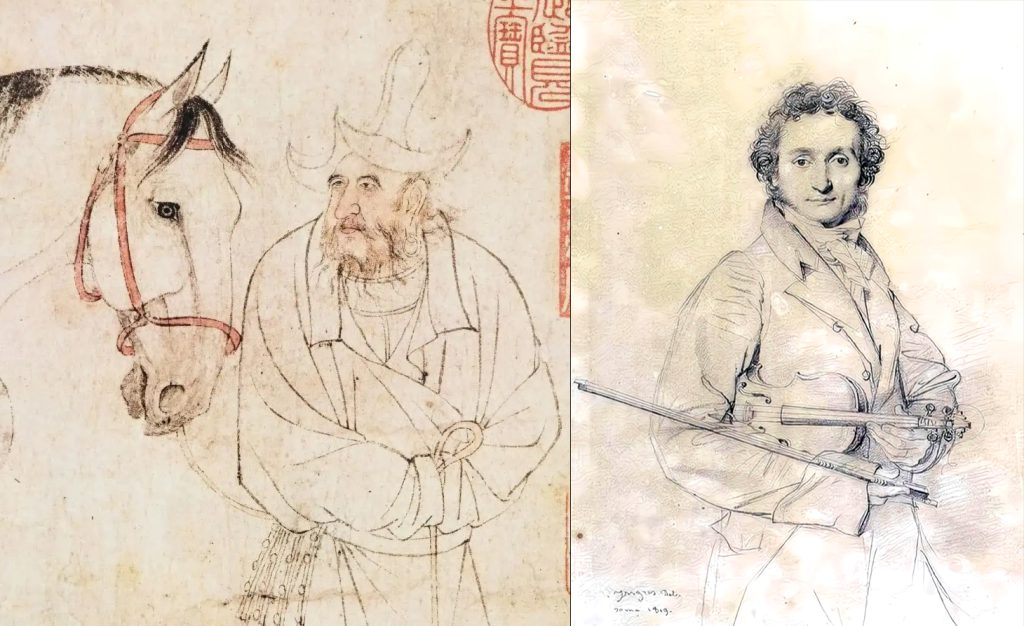
李公麟五马图人物与安格尔素描人物
Over two millennia, Chinese painting has continuously changed and developed. Chinese feudal society experienced several relatively open periods. For instance, the civilizations of the Han and Tang dynasties were directly influenced by India, Afghanistan, and Central Asia. During the Han and Tang, Chang’an, as one of the world’s economic and cultural centers, saw myriad states with their official headgear come to pay homage—it was an era of mutation and leaps. The stone carvings of the Han and the imperial tombs of the Tang all exhibit a vast and magnificent aura. Chinese culture is like “the great rivers do not discriminate against the small streams; thus they can achieve their greatness.” The line magician and master of line drawing, Li Gonglin, and his Five Horses: the groom and the steed share an interconnected spirit and气质 (temperament/character). He was also a sensitive and transcendent poet-painter-calligrapher who revealed his inner world in painting: “My painting is like a poet composing an ode, merely chanting and expressing my nature and emotions.” Huang Tingjian praised him, saying his “graceful bearing is no less than the ancients’!”
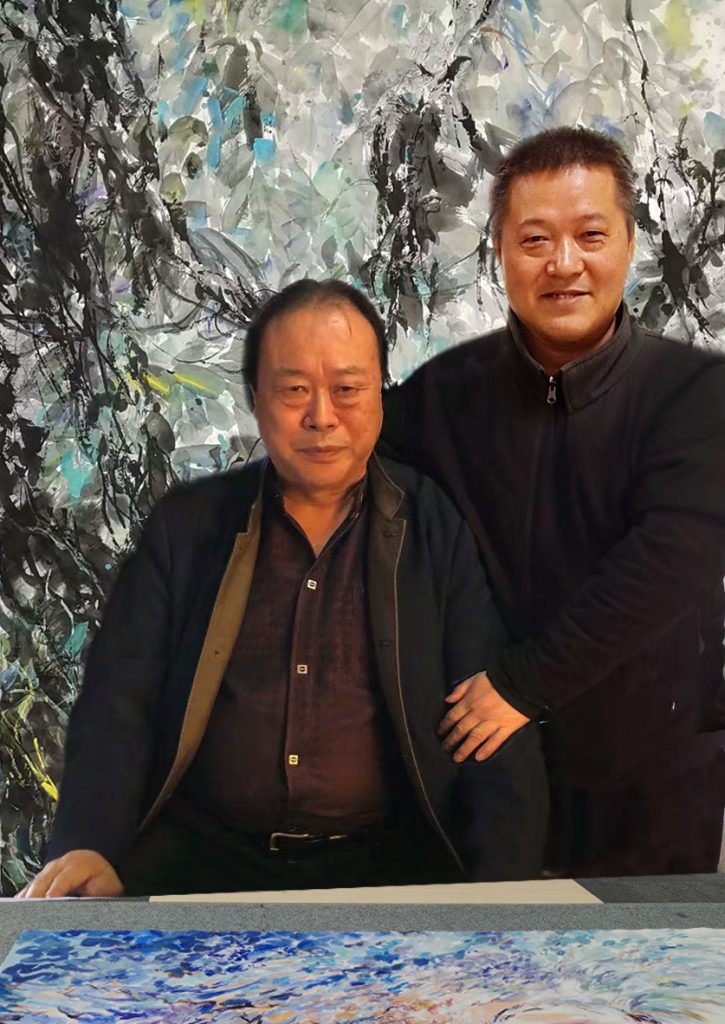
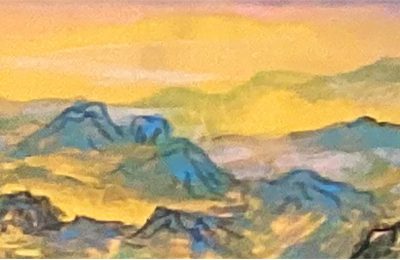
The so-called several great transformations in Chinese art history are all epoch-making milestones. Namely: the transformation of Gu [Kaizhi], Lu [Tanwei], Zhang [Sengyou], Wu [Daozi]; the transformation of Jing [Hao], Guan [Tong], Dong [Yuan], Ju [Ran]; the transformation of Li Cheng and Fan Kuan; the transformation of Li [Tang], Liu [Songnian], Ma [Yuan], Xia [Gui]; the transformation of Huang [Gongwang], Wang [Meng], Ni [Zan], Wu [Zhen]; the transformation of Wen [Zhengming], Shen [Zhou], Qiu [Ying], Chen [Chun]… These changes indeed represent successive leaps. The doctrine that “if Heaven does not change, the Way does not change” cannot be used to explain the development of Chinese art history. In modern times, Wu Changshuo and Qi Baishi were also transforming. Huang Binhong engaged in a linear structure akin to庖丁解牛 (Cook Ding dissecting an ox—masterful skill), not deliberately depicting superficial texture, but extracting the image floating on the surface, painting the sinews and bones, not the skin. He is a良师 (excellent teacher) of mountain-form解剖课 (anatomy class). The ancients cared too much about form and meticulous execution because they had a purpose—to be complete. Huang Binhong was different; it was his true nature and essence, not for commissions or to please viewers. The ancients also pursued new methods but未能实现 (could not achieve them). The reason lies in being constrained by their era and the视野 (vision/scope) of Eastern and Western cultures. Thus, the ancients also wished to use light and color well, but due to historical limitations, did not attain the method. The effects achieved in Master Ran’s works today are what the ancients dreamt of.
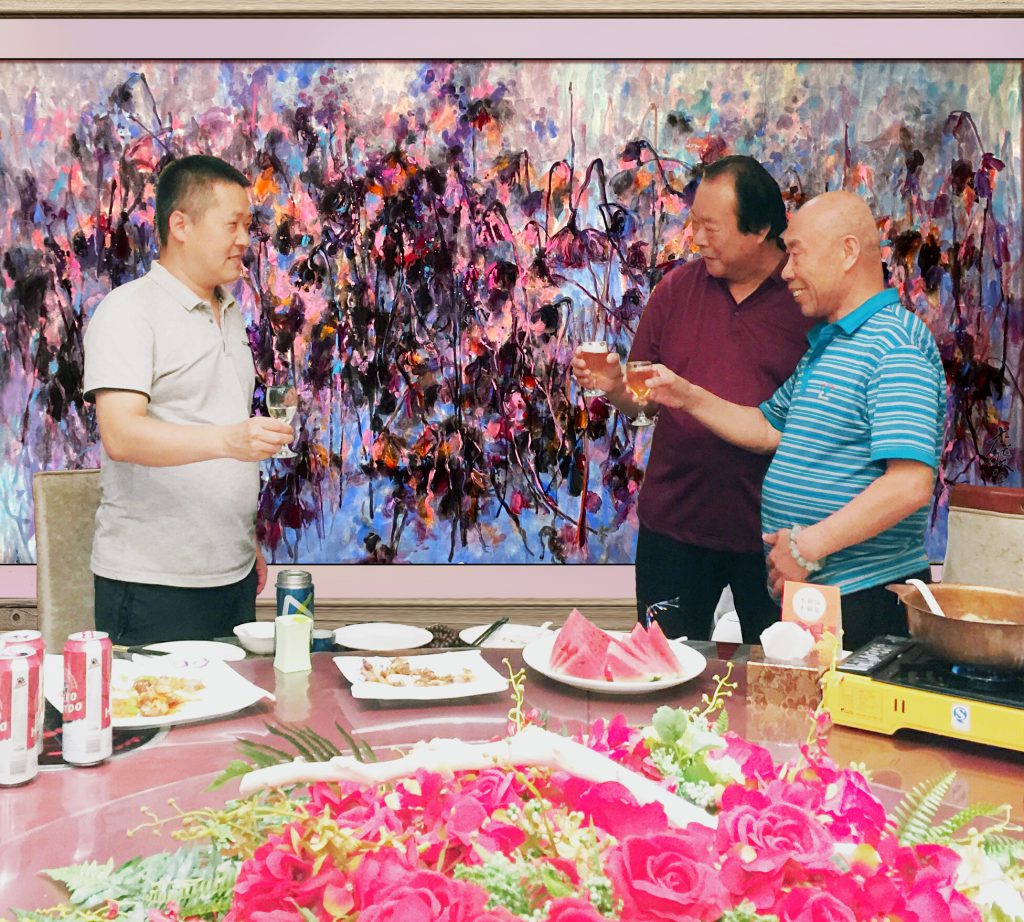
然师先生
Landscape painting cannot depict water without a source or trees without roots. The composition of the picture must sublimate a new qi (energy) of opening and closing, called the great opening and great closing, achieving harmonious unity between ink-form and form-ink. (Note: This paragraph appears repeated in the original.)
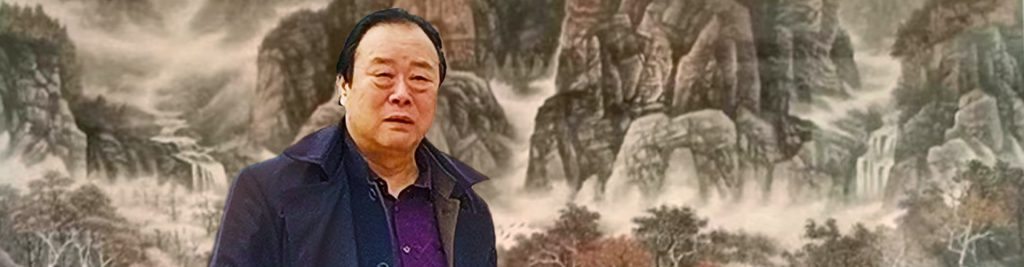
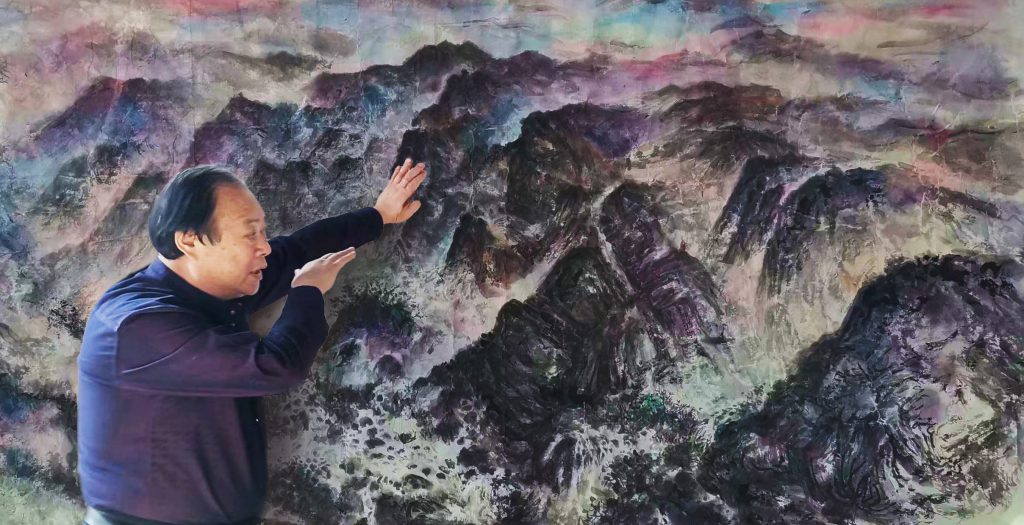
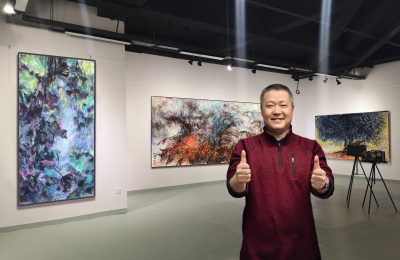
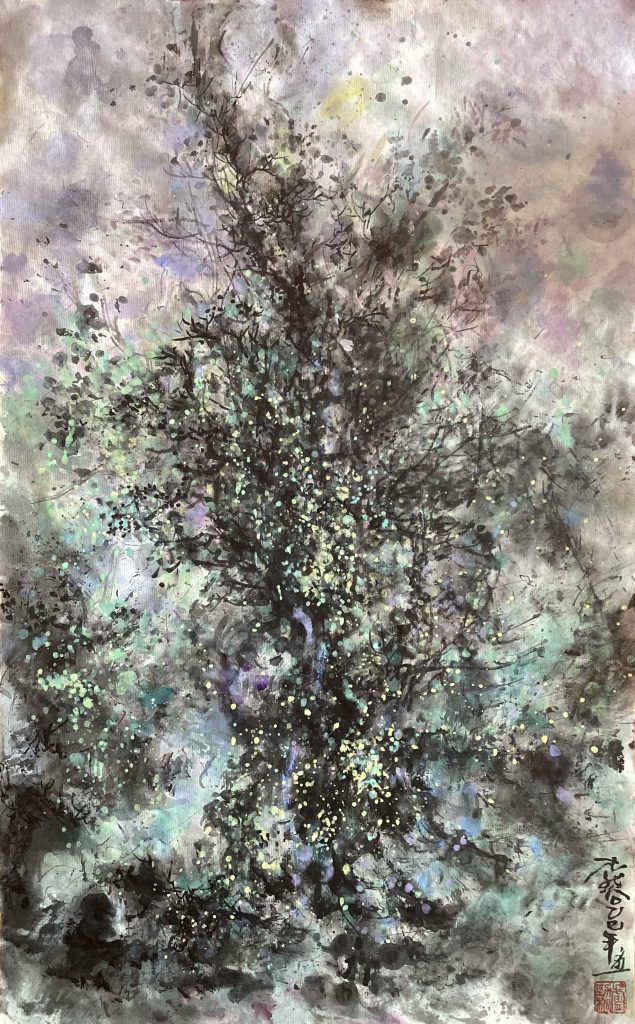
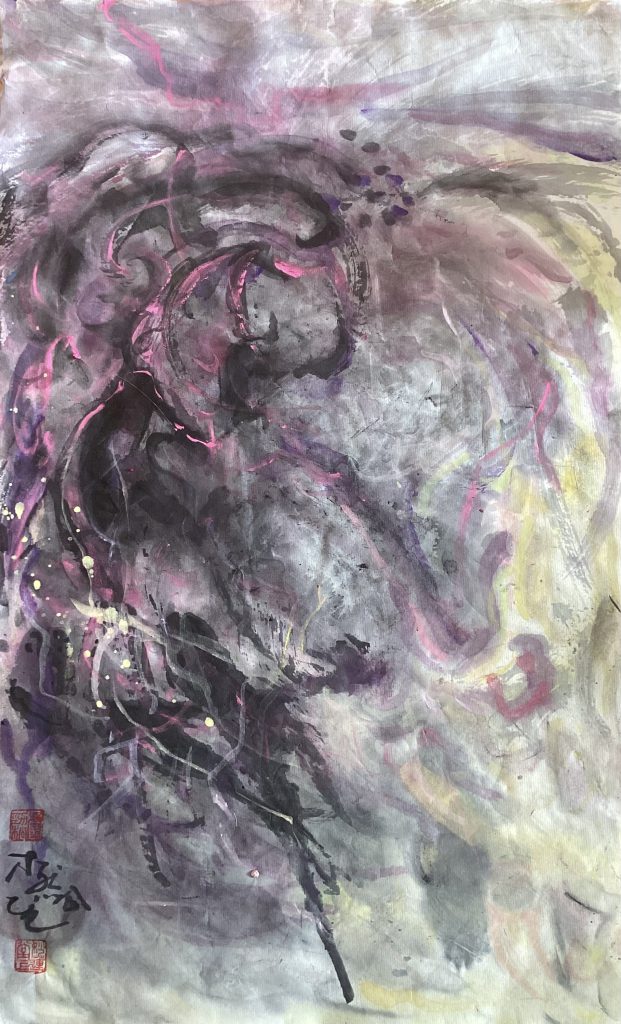
Master Ran told Muran Gong to “break the methods and establish the new,” to break the methods of predecessors. Muran Gong also inquired of the Master不止一次 (not just once). Next, I will continue to extend the stylistic features of Fantasy-Color Freehand. Once one’s own language model is formed, it is exceedingly precious. These works are things from my own mind flowing naturally. I know well they may not necessarily be very good, but I am still gratified because they are original and原生 (raw/organic). In the future, I will contemplate and continue seeking change.
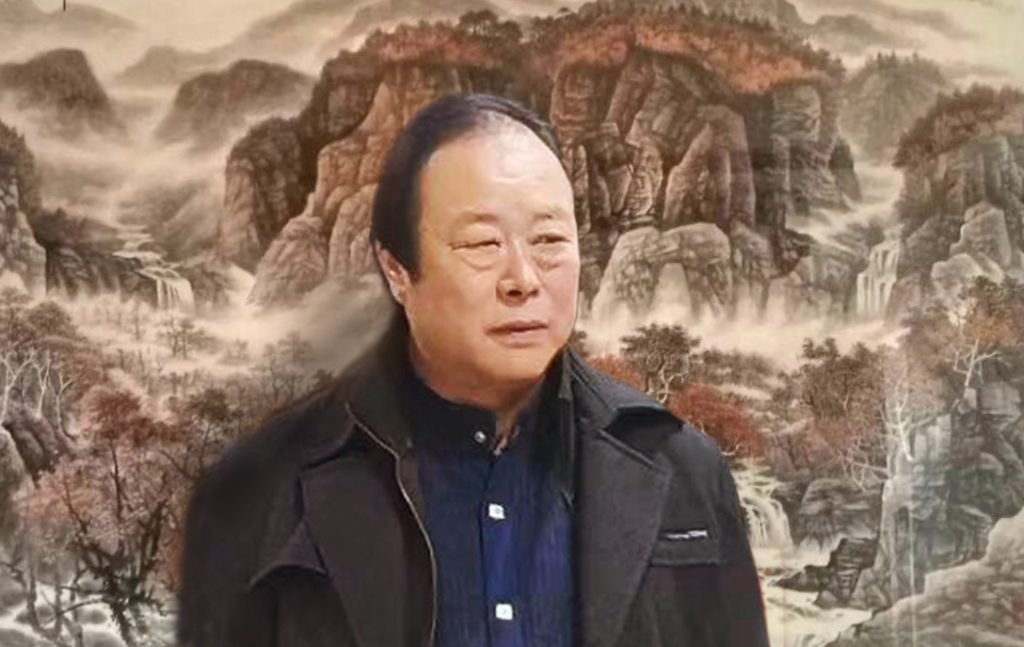
Freehand expression (Xieyi) is an instinct inherent to the Chinese people. “Grand Freehand Expression” passes through five realms: “Form, Spirit, Dao, Teaching, Non-being,” directly aiming for the ultimate goal and终极境界 (ultimate state) of “Great Beauty as Truth,” and then continues with cyclical repetition,再生不息 (ceaseless regeneration),传承 (passed down) generation after generation, reaching the “Ultimate Non-polarity.” Muran Gong says his mission is to explore an artistic model between tradition and the contemporary; the pictorial language in his works is a convergence employing a method of superimposing historical context; it is a reappearance drawing nourishment from the essence of ink art through successive dynasties; it is refining the most culturally representative Chinese language of brush, ink, and line, then fusing it with the external light and color of contemporary and Eastern-Western cultures, superimposing it onto the level of the picture plane, to fulfill the mission entrusted by this era.
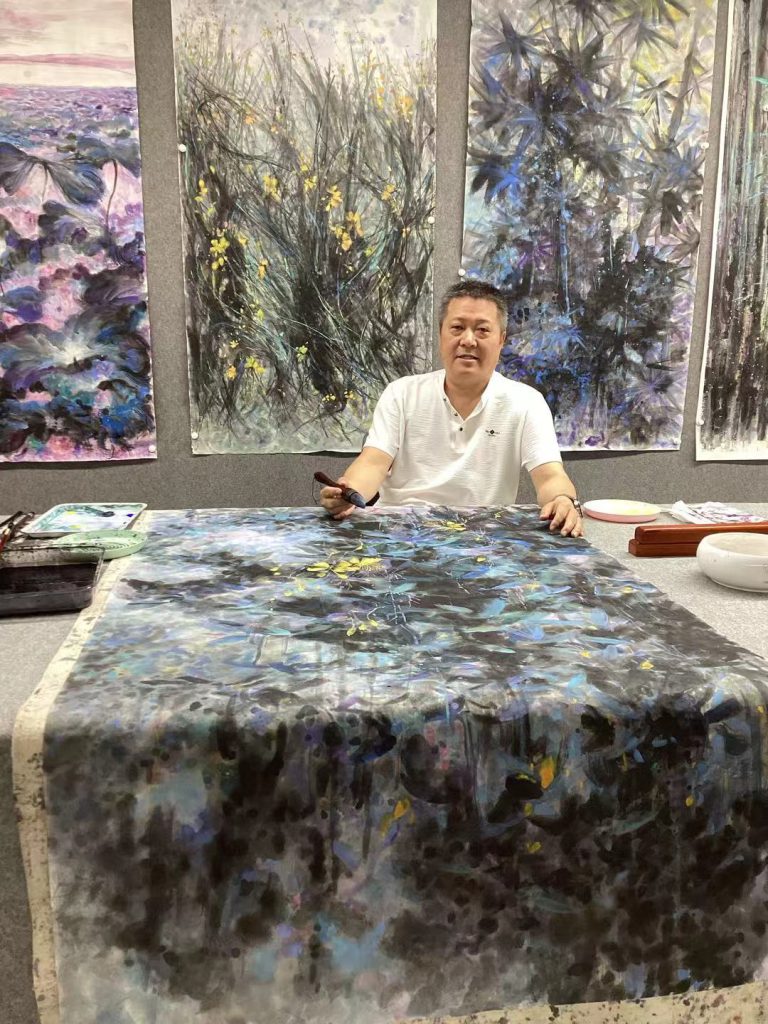
Therefore, the定位 (positioning/orientation) I have arrived at through contemplation and exploration belongs to an upgraded version of traditional art, and I must forge my own distinctive path. The road is still long, and I will continuously elevate.。
To be continued…
Editor: Xinghe
Master Ran Art Research Society
Muran Gong Fantasy-Color Art Research Institute
 微信扫一扫打赏
 支付宝扫一扫打赏