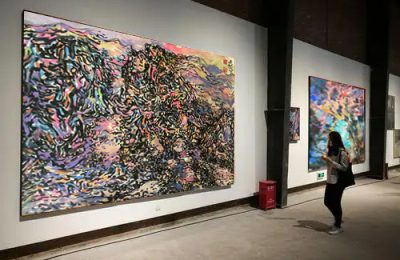
Text: Xinghe | Materials provided by the Mu Rangong Fantasy-Color Freehand Research Institute and Mu Rangong Art Museum
Throughout the long history of Chinese traditional painting, artists have continuously explored and innovated, forming numerous unique techniques and theoretical systems. The Illusory Conception Method, the Seven Colors in One Stroke Method, and the Ink-Color Layering Method are crystallizations of this invaluable artistic experience. These methods have not only expanded the expressive language of painting but have also deepened the spiritual essence of artistic creation. They form the theoretical foundation upon which Mr. Mu Rangong’s Fantasy-Color Freehand conceptual and artistic system has gradually taken shape.
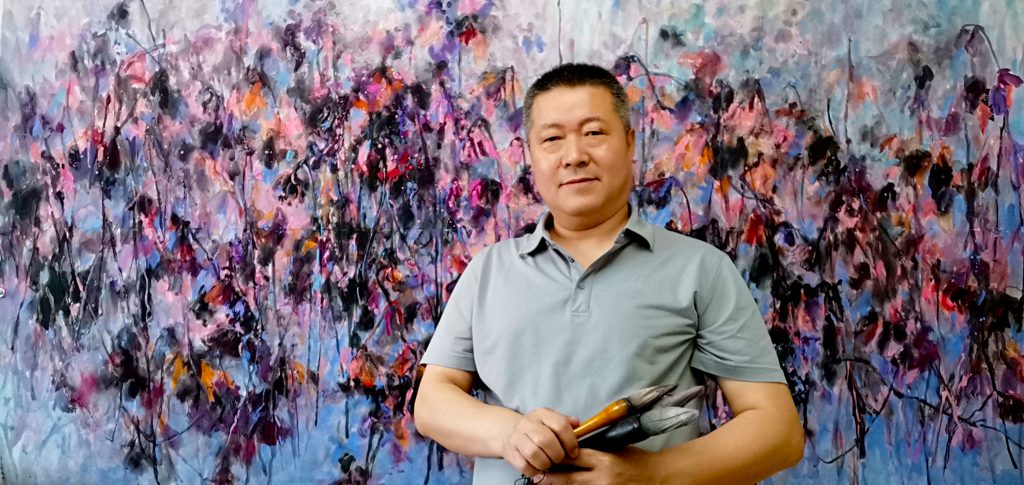
During。 the formative stage of Fantasy-Color Freehand painting, the development of the “Illusory Conception Method” embodies the aesthetic pursuit of “likeness and unlikeness” in Chinese artistic philosophy. This creative approach transcends the mere reproduction of objects, instead infusing the artwork with deeper meaning through the artist’s subjective reinterpretation. As Qi Baishi famously stated, “The essence lies between likeness and unlikeness.” The Illusory Conception Method seeks an artistic truth that goes beyond visual reality. In the act of creation, the artist must grasp the fundamental characteristics of the subject while also integrating personal emotional experiences and spiritual insights. This allows the work to maintain recognizable forms while containing a boundless space for extended meaning. This method places particular emphasis on the use of color tone, leveraging the emotional expressiveness of color to imbue the work with a soul and the power to move the viewer. The Ming Dynasty painter Dong Qichang, in his Notes from the Painting-Meditation Studio, emphasized the importance of “conveying spirit through form.” The Illusory Conception Method represents a deepening and development of this very concept.
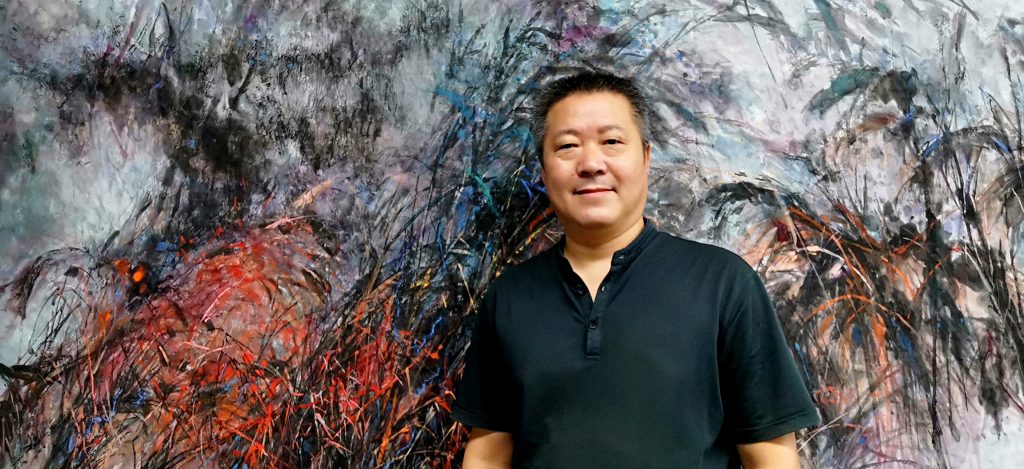
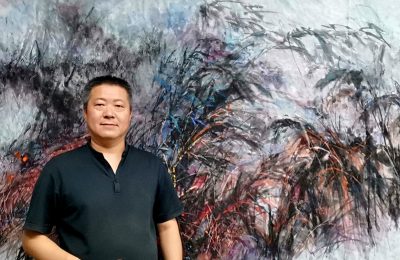
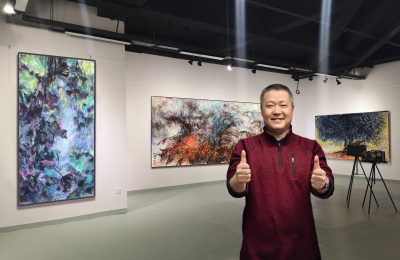
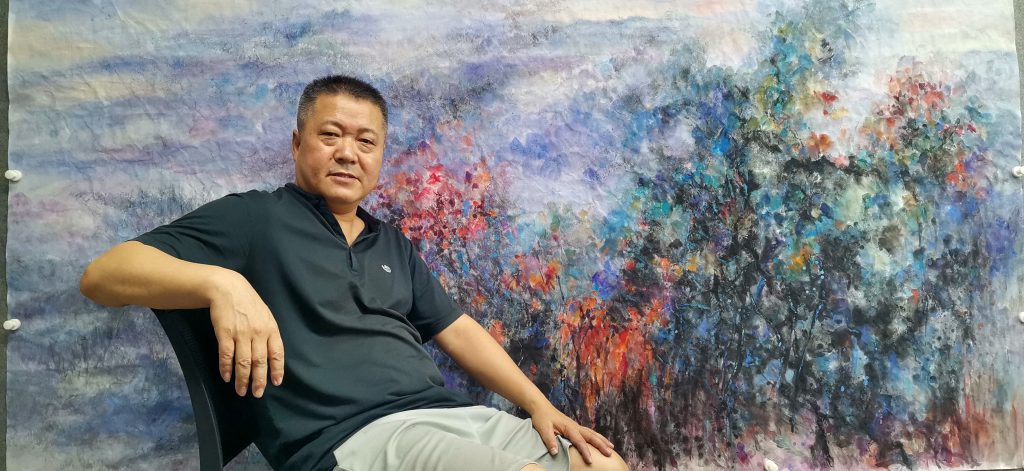
Mu Rangong, originally named Lu Jinsong and also known by his courtesy name Guanyu, is a painter and contemporary artist. A disciple of the great art master Mr. Ran, he is the pioneer of the Fantasy-Color Freehand ink painting style. He graduated from the Stage Design Department of the Liaoning Opera Theater and later completed the Advanced Studies Program in the Oil Painting Department of the Lu Xun Academy of Fine Arts. In his early years, he received direct instruction from the painter and art educator Wang Shenglie and Lü Fuhui, mastering both Eastern and Western painting techniques. His works have been exhibited numerous times and are collected both domestically and internationally.
Since embarking on a period of seclusion and contemplative travel, Mu Rangong’s accumulated insights and reflections have surged forth, resulting in a series of large-scale works that radiate dynamic and awe-inspiring energy. A unique ink language, distinct to a creative painter’s vision, has gradually taken shape, characterized by a powerful sense of color modeling. In his works, we see the refinement of brush and ink techniques representative of Chinese culture, fused with the plein-air color sensibility of contemporary Eastern and Western artistic traditions, layered onto the canvas to fulfill the mission entrusted to this era.
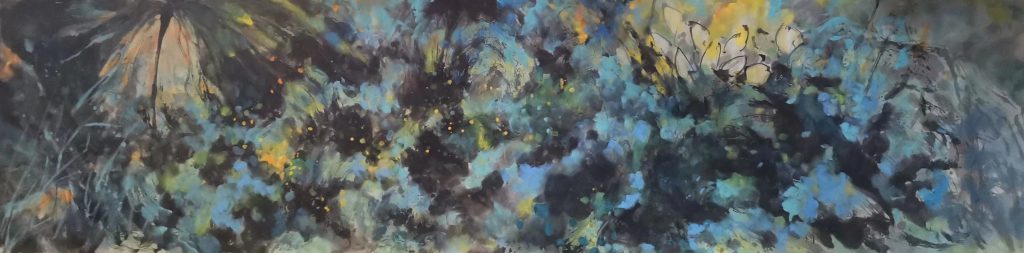
Through the newly created compositions, one can trace the distinct and deeply embedded traces of brush and ink. The artistic process does not rigidly adhere to the traditional understanding of ink painting held by ancient masters, as we exist in the contemporary era—a time marked by the integration of diverse cultural symbols from East and West. The latest language of ink should be presented, rather than works that rely on the mere accumulation of brush and ink imitating photographs. We must traverse the paths paved by our predecessors, thoroughly internalizing their essence, while also forging new paths they did not take, proposing innovations such as the “Seven Colors in One Stroke” method.
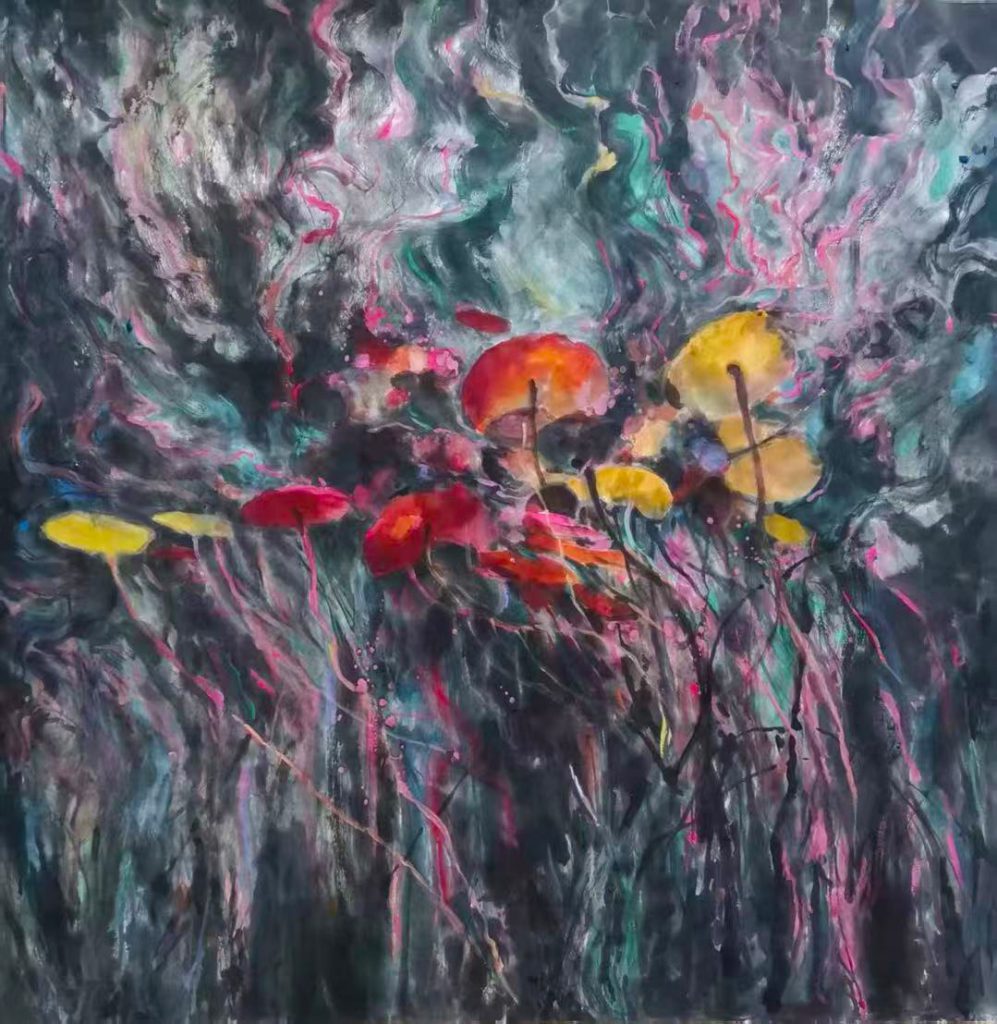
The innovative significance of the “Seven Colors in One Stroke” technique lies in its breakthrough of the color limitations inherent in traditional ink painting. This method was pioneered by the late master, Ran Shi, and later elevated and expanded by Mr. Mu Rangong. Traditional Chinese painting primarily emphasizes ink and wash, with relatively restrained use of color, whereas the “Seven Colors in One Stroke” technique greatly enriches the chromatic expression of the artwork. It is worth noting that the term “seven colors” here is not merely a literal numerical reference but rather denotes the comprehensive application of multiple hues. The artist must precisely control the amount of pigment, its degree of wetness or dryness, and its distribution on the brush tip, achieving a rich variation of colors in a single stroke. This technique places extremely high demands on the painter’s foundational skills, requiring not only mastery of the expression of lines and planes in traditional brush and ink but also an innovative sensibility for color. Zou Yigui of the Qing Dynasty, in his “Xiaoshan’s Manual on Painting,” discussed the essentials of color application, and the “Seven Colors in One Stroke” method elevates these theories to new heights. Works created through this technique exhibit a more intense textural richness in color, greater depth in layering, and artistic effects unattainable through monochromatic washes.
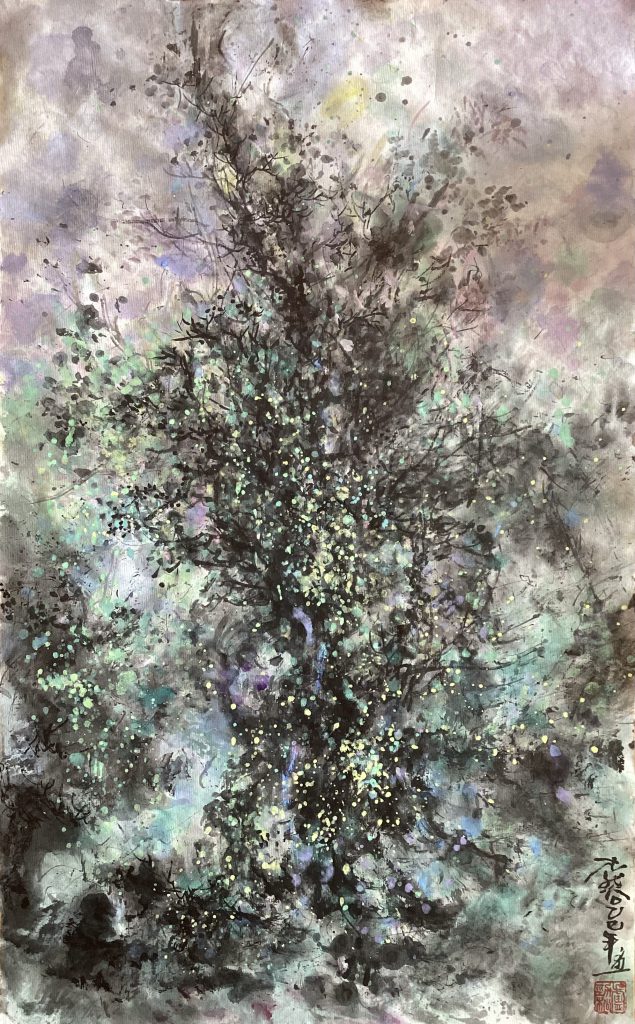
The Ink Layering Technique is a perfect fusion of traditional brush and ink with modern painting concepts. This method draws on the layering techniques of Western painting while preserving the essence of Chinese ink art. During creation, the artist first employs traditional brush and ink techniques on the foundational layer, emphasizing the clarity and visibility of brushstrokes. By alternating between dry, wet, dense, light, and scorched ink tones, the basic structure of the composition is constructed. When the ink is semi-dry, tonal variations, lighting effects, and atmospheric textures such as mist are then rendered. This layered approach retains the charm of traditional brush and ink while enhancing the spatial depth and ambiance of the painting. The compositional theory of “Three Distances” proposed by Guo Xi of the Song Dynasty in Lofty Messages from Forests and Streamsresonates conceptually with the Ink Layering Technique in terms of spatial expression. Through the successive layering of ink tones, the artwork achieves subtle translucency and depth, combining the bone strength of traditional brushwork with the rich stratification of modern painting.
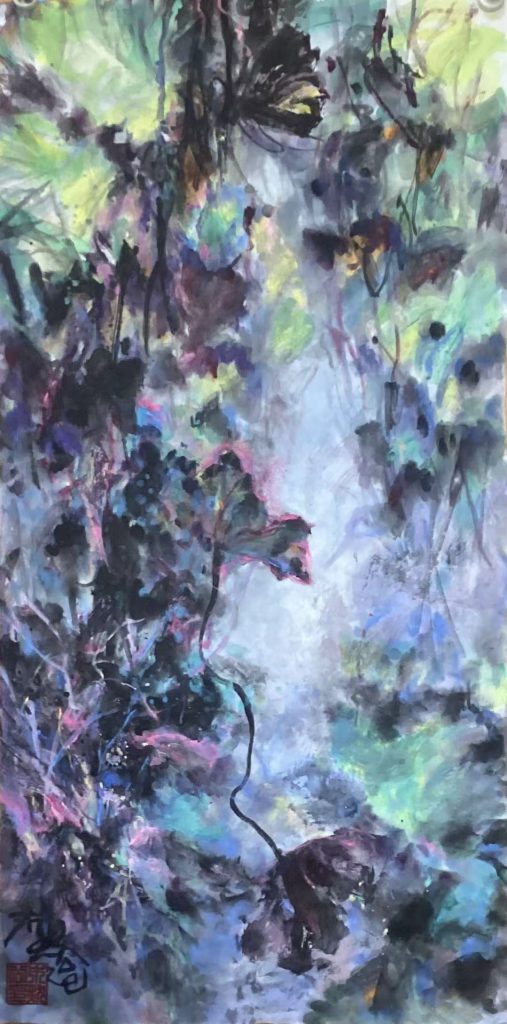
These three techniques share a common emphasis on the creative principle of “conception precedes execution.” Before picking up the brush, the artist must have a clear vision of the overall effect of the composition. The Illusory Conception Method focuses on expressing subjective ideas, the Seven Colors in One Stroke technique pursues rich chromatic expression, and the Ink Layering Method emphasizes the layered interplay of brush and ink. None of these are mere technical accumulations; rather, they are external manifestations of the artist’s emotions and philosophies. As the Yuan Dynasty painter Ni Zan famously expressed, “carefree brushwork does not seek formal likeness”—a sentiment that, in essence, already encapsulates the spiritual core of these innovative techniques.
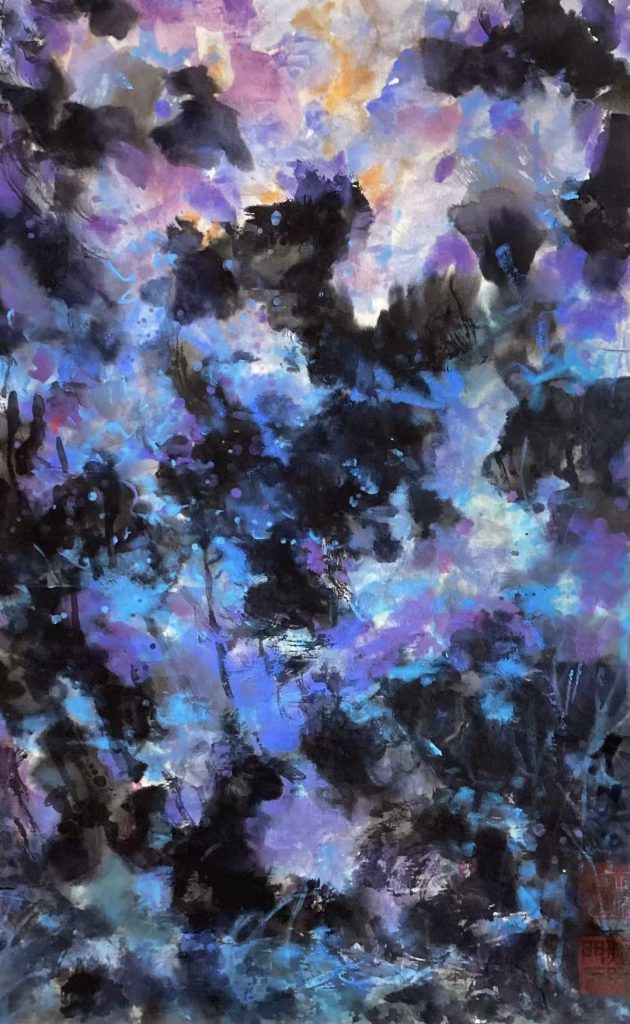
From the perspective of artistic development, these innovative techniques hold significant practical importance. Firstly, they enrich the expressive language of Chinese painting, enabling traditional art forms to better adapt to modern aesthetic needs. Secondly, these techniques break down the boundaries between tradition and modernity, as well as between Eastern and Western art, opening up new possibilities for artistic integration. Most importantly, they demonstrate that Chinese painting, as an ancient art form, still possesses strong vitality and innovative potential.
In specific creative practice, artists can flexibly employ these techniques according to their expressive needs. For example, when depicting the essence of landscapes, the Ink Layering Technique can first be used to construct the framework of the composition, followed by the “Seven Colors in One Stroke” method to render the atmosphere with color. Finally, the Illusory Conception Method can be applied to deepen the spiritual essence of the work. This integrated approach often yields unexpected artistic effects. The theory of “One Stroke” proposed by the Ming Dynasty painter Shi Tao, which emphasizes the unity and innovation of artistic creation, closely aligns with the philosophy underlying the comprehensive application of these techniques.
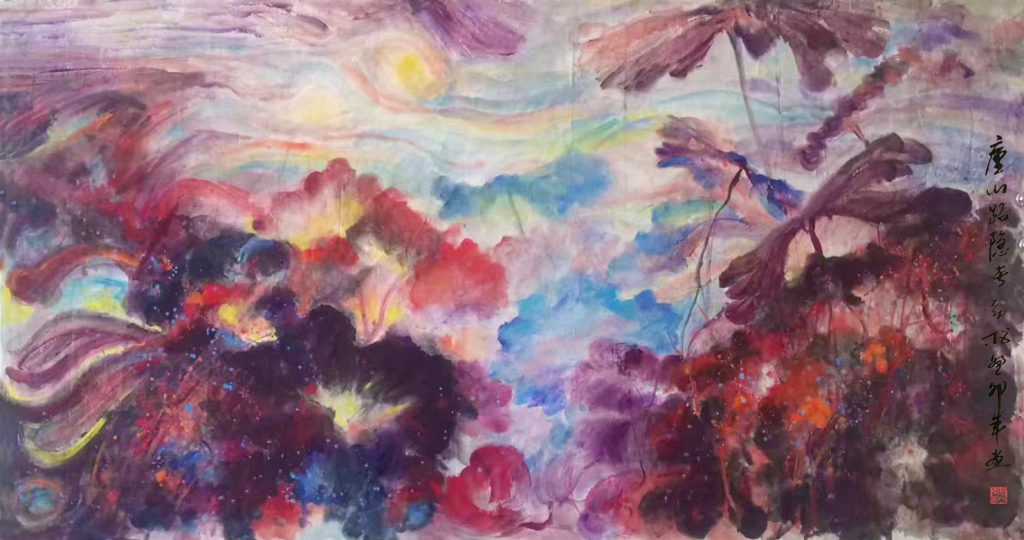
生命交响曲
Contemporary art education should prioritize the study and transmission of these innovative traditional techniques. On one hand, it is essential to deeply understand their technical essentials; on the other hand, it is equally important to grasp the aesthetic philosophy embedded within them. Only by giving equal weight to both technique and concept can one truly master the essence of these artistic methods. As Fang Xun of the Qing Dynasty emphasized in his Mountain Hermitage Painting Discourse, “In learning painting, it is valuable to embody the spirit of antiquity,” yet one must also “derive new meaning within the bounds of tradition.” This precisely reflects the correct attitude toward innovative traditional techniques.
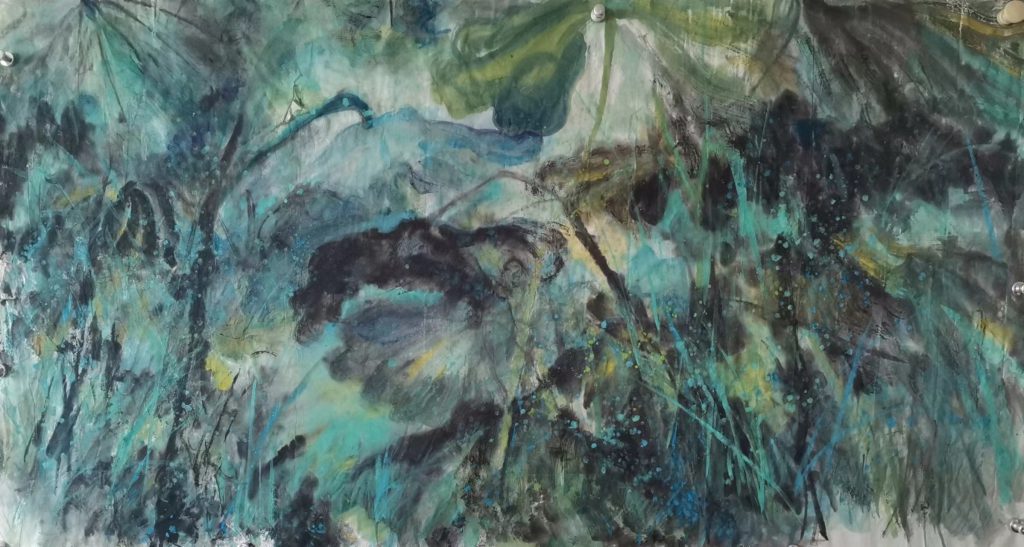
混元之地渊源
Looking ahead, innovative techniques such as the Illusory Conception Method, the “Seven Colors in One Stroke” technique, and the Ink Layering Method employed in Fantasy-Color Freehand will undoubtedly continue to inspire the creative endeavors of a new generation of artists. While preserving the essence of traditional brush and ink, these methods offer rich possibilities for the contemporary development of Chinese painting. They are not only the crystallization of wisdom in traditional Chinese art but also a path toward artistic innovation oriented toward the future. As Mr. Pan Tianshou aptly stated: “Tradition is a living essence, not a rigid doctrine.” These innovative techniques vividly embody the enduring vitality of traditional art.
(End) Text: Xinghe
 微信扫一扫打赏
 支付宝扫一扫打赏